

Investing in the natural capital transition
We believe that the risks and opportunities associated with the consequences of natural capital erosion and the necessary measures to reduce biodiversity loss, regenerate the planet and transform the economy into one that is nature positive are becoming increasingly important.
We believe markets will increasingly price in the costs and opportunities of addressing natural capital depletion. The World Economic Forum estimates the transition to a nature-positive economy, with critical shifts in land, oceans, infrastructure and energy, could deliver an estimated $10 trillion of business opportunities and 395 million jobs by 2030.2
Our Natural Capital Global Equity Fund targets opportunities aligned to the principles of the United Nations’ Sustainable Development Goals (see below specific SDGs) that support and benefit from the transition to a nature-positive economy. We invest with an active, high-conviction approach to address the needs of investors seeking two objectives:
Long-term capital growth
To support the transition to a nature-positive economy
Investment opportunities in the strategy are linked to the following investment themes and aligned with the principles of the following United Nations Sustainable Development Goals:

Circular economy

Climate action

Sustainable ocean

Sustainable land
Our approach
We focus on pairing natural capital credentials of companies alongside shareholder return, and go beyond a simple approach of only investing in companies providing solutions to reduce human impact on nature, to instead also invest in companies transitioning their business models towards a nature-positive economy. Moreover, we seek to drive further positive change by engaging with investee companies on specific biodiversity issues.

Natural Capital credentials alongside shareholder return
In our stock selection process we place significant emphasis on any company having to demonstrate both natural capital credentials and shareholder return as we aim to deliver profitable growth for our clients from exposure to the natural capital theme.

Operational leaders
Our proprietary transition risk model helps identify companies leading in aligning their business models to a nature positive economy across all sectors. Our approach aims to deliver more resilient performance over the long term, uncover more alpha opportunities, and more effectively support the natural capital transition than by investing in solutions-focused companies alone.

Bespoke engagement
We engage with all portfolio companies on specific natural capital issues. Our three-year structured engagement programme systematically tracks all companies with an escalation pathway that could ultimately lead to divestment if we are not satisfied with their progress.
Natural Capital Global Equity Fund
Aviva Investors Natural Capital Global Equity Fund (SICAV)
This fund aims to deliver long-term capital growth by investing in companies globally that either provide solutions to reduce biodiversity loss or are transitioning their business models to manage their impact on nature, while avoiding those that do not meet minimum environmental criteria.

Aviva Investors Natural Capital Global Equity: Strategy in brief
An equity fund that invests globally in companies that are either enabling or transitioning toward a nature-positive economy.
Evidencing how we are progressing against our sustainable outcomes objective
This report looks at the progress the fund has made in 2024, in delivering tangible sustainable outcomes for clients, across the companies invested in as well as through company engagement and macro stewardship.

Key risks
Full information on the risks applicable to the Fund is detailed in the KIID and Prospectus.

Investment risk and currency risk
The value of an investment and any income from it can go down as well as up and can fluctuate in response to changes in currency and exchange rates. Investors may not get back the original amount invested.

Emerging market risk
Investments can be made in emerging markets.
These markets may be volatile and carry higher risk than developed markets.

Sustainability risk
The level of sustainability risk to which the fund is exposed, and therefore the value of its investments, may fluctuate depending on the investment opportunities identified by the investment manager.
Natural Capital Global Equity portfolio managers

Jonathan Toub
Portfolio Manager, Global Equities
Need more information?
For further information, please contact our investment sales team.
Our views
-

UK low-carbon policy: What to look out for in 2026
27 Jan 2026
Aviva’s Nick Molho looks at this year’s policy priorities and likely developments for the UK’s low-carbon agenda, and reflects on what it means for investors.
-
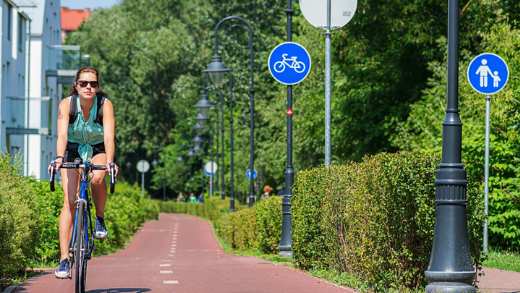
Cities of the future: What will cities look like in 2050?
8 Jan 2026
Today’s private market investments will shape 2050 cities. We explore what this could look like, and the related challenges and opportunities.
-
Boosting low-carbon investment in the UK: 2025 Roadmap Update
11 Dec 2025
In 2024, we outlined our view on the most important public-policy interventions to unlock private investment in the low-carbon economy. In this update, we take stock of policy developments since, and look ahead to 2026 and beyond.
-

Navigating nature: Opportunities for the investor of tomorrow
10 Dec 2025
Our society, economies and financial systems are embedded in nature, not external to it. This paper sets out the actions we are taking to understand nature-related risks and opportunities to deliver outcomes that meet our clients’ needs, and to support nature-related global goals.
-

Decarbonising agriculture: Unlocking investment in sustainable land use
17 Jun 2025
Agriculture is integral to reaching net-zero emissions and reversing nature loss. Its transition also presents huge investment opportunities. We held a roundtable of experts to discuss challenges and solutions.
-

Climate Stewardship 2030 programme
29 Apr 2025
Designed to support our holistic stewardship approach, Aviva Investors adopted its Climate Stewardship 2030 programme (CS30) in 2024.
-
Decarbonising buildings: Five barriers and how to overcome them
28 Jan 2025
The built environment generates almost two-fifths of global emissions, but decarbonising the sector will require a coordinated effort. We brought together experts across the value chain to discuss shared challenges and solutions.
-
Decarbonising transport: Five key challenges and how to overcome them
26 Nov 2024
Creating sustainable transport solutions is vital to meet net-zero pledges, but progress has been patchy. To encourage mobilisation across value chains, we brought together a range of sector experts to identify key blockers and potential solutions.
-

Building bridges to net zero: Mobilising value chains for decarbonisation
25 Nov 2024
From aviation to heavy industry, achieving net zero requires a collective unlocking of entire ecosystems. This is what our sector roundtables aim to do, by bringing together stakeholders from across the value chain of high-impact sectors.


1. SwissRe Biodiversity and Ecosystem Services (BES) 2020. IPBES (2019) Global assessment of the status of biodiversity and ecosystems. Planetary boundaries: Stockholm Resilience Centre. Ecology ecosystem services.
2. New Nature Economy Report II: The Future of Nature and Business', World Economic Forum, July 14, 2020.
Note for UK Investors: This Fund is domiciled in Luxembourg and is authorised by the Commission de Surveillance du Secteur Financier (CSSF). The Fund is recognised in the UK under the Overseas Funds Regime but is not a UK-authorised Fund and therefore is not subject to UK sustainable investment labelling disclosure requirements. UK investors should be aware that they can make a complaint about the fund, its management company, or its depositary. However, complaints may not be eligible for resolution by the UK’s Financial Ombudsman Service and any claims for losses related to the management company or depositary will not be covered by the Financial Services Compensation Scheme (FSCS). UK investors should consider seeking their own financial advice before making any decisions to invest and refer to the scheme prospectus for further information.
Important Information
THIS IS A MARKETING COMMUNICATION
Unless stated otherwise any opinions expressed are those of Aviva Investors. They should not be viewed as indicating any guarantee of return from an investment managed by Aviva Investors nor as personalised advice of any nature. This document should not be taken as a recommendation or offer by anyone in any jurisdiction in which such an offer is not authorised or to any person to whom it is unlawful to make such an offer or solicitation. The legal documentation and the subscription documents should be read before an investment is made. Portfolio holdings are subject to change at any time without notice and information about specific securities should not be construed as a recommendation to buy or sell any securities. For Investors located in EU/EEA countries, the Prospectus and Key Information Document (‘KID’), as well as the latest annual and semi-annual reports of Aviva Investors SICAV are available, free of charge from the registered office of the fund located at 2 rue du Fort Bourbon .L-1249 Luxembourg, Grand Duchy of Luxembourg, or from www.eifs.lu/aviva-investors. The Prospectus is available in English. Where a sub-fund of Aviva Investors SICAV is registered for public distribution in a jurisdiction, a KID in the official language of that jurisdiction will be available. For investors located in France the Fund documentation is also available at the registered office of the local centralised agent: BNP Paribas Securities Services, 3 rue d’Antin, 75002 Paris, France. For investors located in Italy, the Fund documentation is available at the following local paying agents’ offices: • Allfunds Bank S.A.U, Milan Branch, via Bocchetto, 6, 20123 Milan, Italy • Société Générale Secrities Services S.p.A, Via Benigno Crespi 19/A, 20159 Milano, Italy • Banca Monte dei Paschi di Siena S.p.A., Piazza Salimbeni 3, 53100 Siena SI For investors located in Spain, the Fund documentation is available at the office of Allfunds Bank S.A.U., Calle de los Padres Dominicos 7, 28050 Madrid, Spain. For investors located in Switzerland, the Fund documentation is available at the Swiss representative’s office BNP PARIBAS, Paris, Zurich branch, Selnaustrasse 16, 8002 Zurich, Switzerland. For Investors located in United-Kingdom, the Fund documentation is also available at the UK facilities agent registered office: Aviva Investors Global Services Limited, 80 Fenchurch Street, London, EC3M 4AE, United Kingdom. Where relevant, information on our approach to the sustainability aspects of the fund and the Sustainable Finance disclosure regulation (SFDR) including policies and procedures can be found on the following link: https://www.avivainvestors.com/en-gb/capabilities/sustainable-finance-disclosure-regulation/ In Europe this document is issued by Aviva Investors Luxembourg, acting as the Management Company of the fund, with its registered office located 2 rue du Fort Bourbon, L-1249 Luxembourg, Grand Duchy of Luxembourg. Aviva Investors Luxembourg is supervised by the Commission de Surveillance du Secteur Financier, R.C.S Luxembourg B25708. In the UK this document is issued by Aviva Investors Global Services Limited, registered in England and Wales No. 1151805, with its registered office located at 80 Fenchurch Street, London, EC3M 4AE. Aviva Investors Global Services Limited is authorised and regulated by the Financial Conduct Authority. Firm Reference No. 119178. In Switzerland, this document is issued by Aviva Investors Schweiz GmbH.