

EU Sustainable Finance Disclosure Regulation
The EU Sustainable Finance Disclosure Regulation (SFDR) is a new set of European Union rules that came into effect on March 10, 2021, with the goal of making the sustainability profile of funds more comparable and easy to understand for investors. They categorise products into specific types and include metrics for assessing the environmental, social and governance (ESG) impacts of the investment process for each fund.
As the name suggests, this regulation will place much more emphasis on disclosure. The information on this page describes our approach to SFDR and includes our policies and procedures, disclosed in accordance with these new rules.
Many of our clients will also be subject to these new requirements. Apart from our disclosures in prospectuses, annual reports and on this website, we will provide our clients with the information they need to comply with SFDR.
Background to SFDR and how it impacts Aviva Investors
SFDR is part of the EU’s wider Sustainable Finance Framework, which is backed by a broad set of new and enhanced regulations that will apply across the region. The framework includes the Sustainable Finance Action Plan, which aims to promote sustainable investment across the EU, and a new Taxonomy to categorise economic activity through a sustainability lens and help create a level playing field across the region.
Product reporting obligations under SFDR
The most visible and impactful aspect of SFDR is the reporting format funds and mandates will need to make based on three categories, as laid out by Articles 8 and 9 of the SFDR and those funds not defined by either article, referred to as ‘neutral’ funds.
Neutral funds do not integrate any kind of binding sustainability controls into their investment process and can include stocks that may be excluded by ESG-focused funds, such as tobacco companies or thermal coal producers. While neutral funds are still allowed to be sold in the EU, they may not be promoted as ESG funds.
Among other characteristics, Article 8 products promote environmental or social characteristics, or a combination of those characteristics, provided the companies in which investments are made follow good governance practices.
Article 9, also referred to as ‘products targeting sustainable investments’, covers products targeting bespoke sustainable investments and those that have sustainable investment as their objective.
Aviva Investors - Principal Adverse Sustainability Impacts Statement
Remuneration
To meet the requirements set out under Article 5 of the SFDR, we have published additional information on remuneration and ESG in our IFPR Disclosures.
Asset Class Responsible Investment Policies

Private Markets Responsible Investment and Sustainability Risk Policy
This policy describes how we integrate our responsible investment philosophy into each asset class investment process. Private Markets covers traditional real estate products and our alternatives business including infrastructure equity and commercial property/private market debt.

Public Markets Responsible Investment and Sustainability Risk Policy
This policy describes how we integrate our responsible investment philosophy into each asset class investment process across Public Markets, which includes Credit & Equities (funds managed by Aviva Investors that primarily invest in equities and bonds and includes money market funds) and Multi Assets (including Multi-Strategy, Multi-Asset ranges, Fund of Funds, Liability Driven Investment, Global Convertibles).
Discover our responsible investment policies.

Aviva Investors Luxembourg Sustainability Risk Policy
Aviva Investors Luxembourg (AILX) recognises and embraces its duty to act as long-term stewards of clients’ assets, maintaining a deep conviction that environmental, social, and governance (ESG) factors can have a material impact on investment returns and client outcomes. This policy includes the key pillars AILX’s ESG approach including consideration of sustainability risk and how they apply to the funds we operate.
Luxembourg SICAV funds with SFDR ESG characteristics (Article 8 and 9)
Aviva Investors has a wide range of sub-funds with Article 8 status as well as some Article 9 funds.
The investment process includes binding ESG characteristics (ESG screens and sector exclusions), and integration of ESG considerations and the investment manager’s transition philosophy into investment decisions.
This approach aligns with Aviva Investors’ long-standing investment philosophy and commitment to responsible investing.
For further information regarding these funds, please see the below documentation which includes the SICAV Impact Assessment Matrix and an outline of Aviva Investors’ approach to Article 9. The detailed pre-contractual information is within the prospectus and also in the website disclosure section of this webpage.
Article 9 Client Facing Summary
For further details of the Aviva Investors' approach to Article 9, please follow the below link.
Website product disclosures
For financial products that promote environmental or social characteristics, financial market participants shall publish the information referred to in Article 10(1) of Regulation (EU) EN 32 EN 2019/2088 and Articles 25 to 36 of this Regulation.
Responsible investment views
-

Sustainability
UK low-carbon policy: What to look out for in 2026
27 Jan 2026
Aviva’s Nick Molho looks at this year’s policy priorities and likely developments for the UK’s low-carbon agenda, and reflects on what it means for investors.
-

Sustainability
Cities of the future: What will cities look like in 2050?
8 Jan 2026
Today’s private market investments will shape 2050 cities. We explore what this could look like, and the related challenges and opportunities.
-

Fixed income
Buy and maintain credit: Taking the road to net zero
15 Dec 2025
Long-term trends like climate change are particularly important for buy-and-maintain investors. How can they integrate climate objectives, such as net zero by 2050, into their portfolios?
-

Equities
Boosting low-carbon investment in the UK: 2025 Roadmap Update
11 Dec 2025
In 2024, we outlined our view on the most important public-policy interventions to unlock private investment in the low-carbon economy. In this update, we take stock of policy developments since, and look ahead to 2026 and beyond.
-

Sustainability
Navigating nature: Opportunities for the investor of tomorrow
10 Dec 2025
Our society, economies and financial systems are embedded in nature, not external to it. This paper sets out the actions we are taking to understand nature-related risks and opportunities to deliver outcomes that meet our clients’ needs, and to support nature-related global goals.
-

Sustainability
A tale of two priorities: Aligning financial flows to climate mitigation
30 Oct 2025
Financial flows shall be “consistent with low greenhouse-gas emissions and climate-resilient development”, according to Article 2.1.c of the Paris Agreement. Yet most finance continues to flow to business as usual. How can this change?
-

Sustainability
Solid foundations: The case is building for infrastructure equity
3 Oct 2025
In this article Viktor Dietrich, Research Director for infrastructure, venture capital and natural capital, revisits the case for investing in European infrastructure equity. He suggests reasons why small-to-mid-sized opportunities should feature prominently on investors’ radar.
-

Sustainability
Moving beyond decarbonisation: From climate targets to transition credibility
29 Sep 2025
Holistic stewardship across corporates, value chains, and sovereigns is essential to shaping viable, investable climate transitions. But its focus must now move beyond targets to the real-world delivery needed to make those targets achievable.
-

Equities
Energy-intensive industries: Unlocking low-carbon investment
16 Sep 2025
Vital industries for UK growth like steel or cement are also energy intensive, and their decarbonisation is essential. We convened a roundtable of experts to discuss barriers and solutions to unlocking low-carbon investment opportunities.
-

Sustainability
Step by step: Policy progress towards a low-carbon UK economy
1 Sep 2025
The UK government has published a raft of policies and action plans on decarbonisation over the past 12 months. We assess the progress to date and discuss what remains to be done.
-

Equities
The power of governance: Our key takeaways from the 2025 AGM season
20 Aug 2025
While fewer shareholder resolutions were tabled at company AGMs, we continued to encourage high standards of corporate governance practice, recognising individual company context and the importance of long-term value creation.
-

Private Markets
MegaTRENDs: Why TRENDs matter for investing in private markets
27 Jun 2025
A set of megatrends is reshaping the world, creating new opportunities and risks for investments in private markets.
-

Equities
Decarbonising agriculture: Unlocking investment in sustainable land use
17 Jun 2025
Agriculture is integral to reaching net-zero emissions and reversing nature loss. Its transition also presents huge investment opportunities. We held a roundtable of experts to discuss challenges and solutions.
-

Fixed income
Sovereign engagement: Driving positive change while delivering long-term value
14 May 2025
Investor engagement with governments on their climate commitments can be a powerful complement to other forms of stewardship. It can also help investors identify opportunities and mitigate risks, says Thomas Dillon.
-

Sustainability
Climate Stewardship 2030 programme
29 Apr 2025
Designed to support our holistic stewardship approach, Aviva Investors adopted its Climate Stewardship 2030 programme (CS30) in 2024.
-
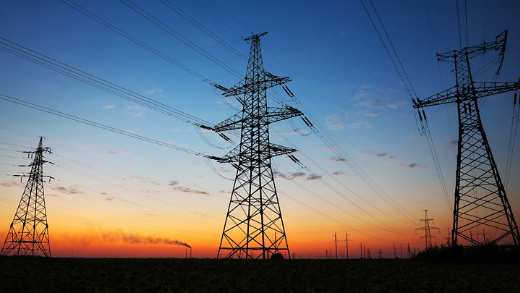
Sustainability
Decarbonising power: Challenges and solutions
28 Apr 2025
Decarbonising power is essential to provide affordable, clean energy and deliver net zero ambitions. It also brings significant investment opportunities. We convened a range of industry experts to discuss the barriers and how to overcome them.


